


Site update in progressNew Rohs Ridge Farm content will be released shortly.

A closer look at the hives.

The bees are at the center of Rohs Ridge Farm honey. This page is shaped as an easy overview for customers, curious neighbors, and anyone who wants to understand what happens before honey reaches a jar.

Beekeeping basics

A hive is a living colony, not a honey machine.

Honey starts with thousands of bees working together. Forager bees collect nectar and pollen from nearby blooms, nurse bees care for young brood, worker bees build and repair wax comb, and the queen keeps the colony growing by laying eggs.

A beekeeper's job is to support that rhythm. Good hive care means watching the seasons, giving the bees room when they need it, checking that the queen is healthy, and harvesting only when the colony has enough stored honey to spare.

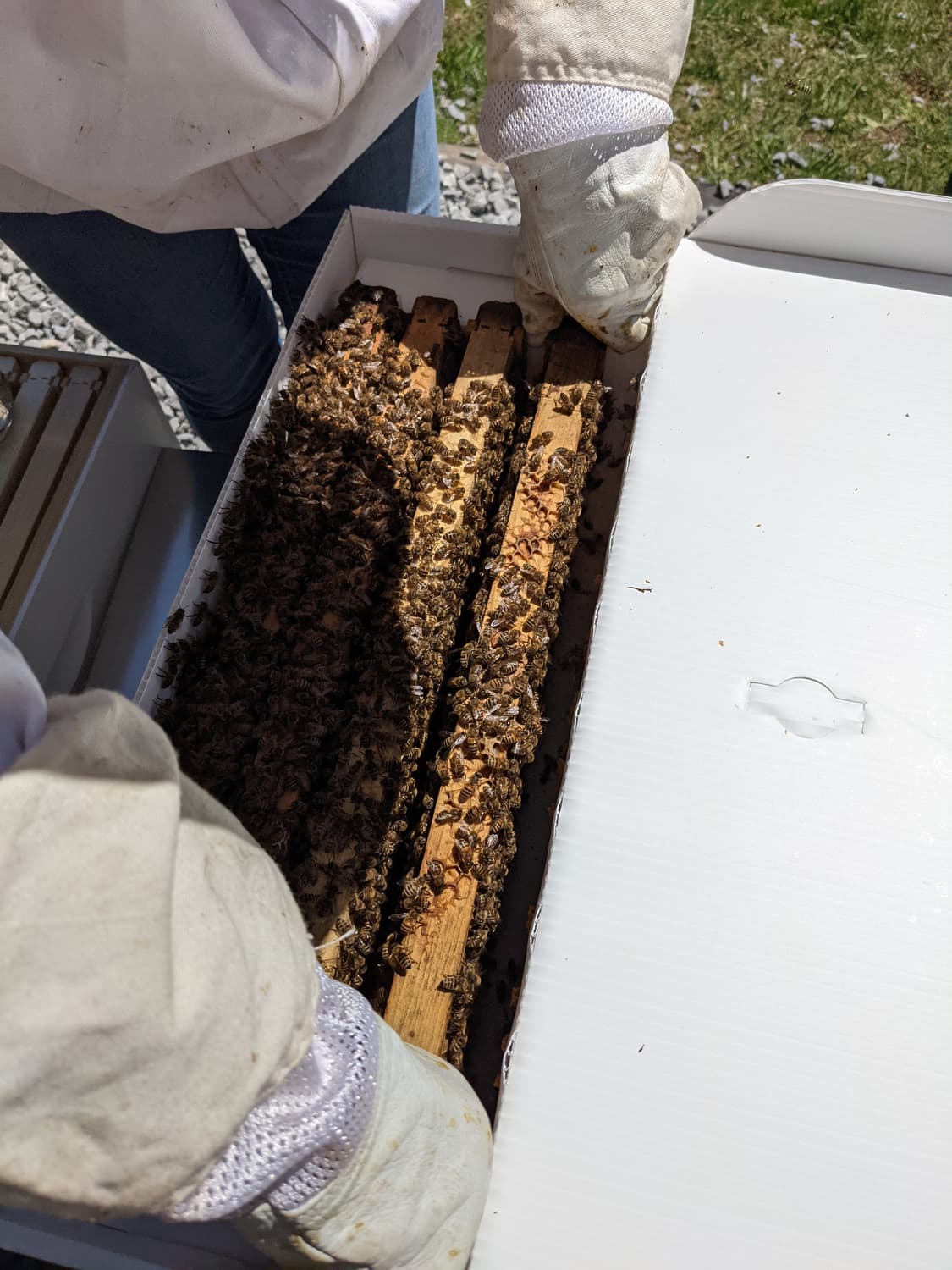
A bee nuc with frames, bees, and a small working colony
A nuc is a small, already-working colony. It gives new beekeepers frames of bees, brood, food stores, and a queen instead of starting from loose bees alone.
Queen marking helps the beekeeper find the queen more easily during inspections, which keeps the check-in shorter and calmer.

Starting a hive

Packages and nucs are two common ways beekeepers begin.

A package is a screened box of loose bees with a separate queen cage. The bees are poured or shaken into prepared equipment, then given time to accept the queen and begin building comb.

A nuc, short for nucleus colony, is more like a small working hive. It usually includes frames of bees, brood, food stores, and a laying queen, so the colony has a head start.

Inside the hive

Inspections are calm check-ins, not just honey checks.

During a hive inspection, a beekeeper looks for signs that the colony is healthy: eggs or young brood, enough food, room to grow, and a steady queen pattern.

The goal is to learn what the bees need before small problems become big ones. Sometimes that means adding space, checking for pests, feeding during a gap, or simply closing the hive back up.

Finding the queen

Queen marking makes inspections faster and gentler.

The queen can be hard to spot in a busy hive. A small dot of color on her back helps the beekeeper find her more quickly and confirm that the same queen is still leading the colony.

Marking is done carefully with the queen held still for a moment, then she is returned to the bees. The point is not decoration; it reduces time spent searching frame by frame.

Questions for Cameron

Details to collect before this page is final.

These prompts will help turn the overview into Rohs Ridge Farm's specific beekeeping story instead of a generic explanation.

  • How many hives do you currently manage, and how many do you want Rohs Ridge Farm to grow into?
  • Do you usually start new colonies with packages, nucs, splits from your own hives, or a mix?
  • When do packages usually arrive in your area, and what do you do before they get to the farm?
  • What does a normal hive inspection look like for you from start to finish?
  • What queen marking color or system do you use, and how often do you mark queens?
  • What are the biggest things you want beginners to understand before buying bees?
  • What flowers, trees, and seasonal blooms do your bees work around Rohs Ridge?
  • How do you decide when honey is ready to harvest, and what do you leave for the bees?

Honey from these hives

Every batch reflects the season.

Once Cameron fills in the farm-specific details, this closing section can explain the local bloom season, what makes the honey taste different from batch to batch, and how customers can ask what is currently available.

Ask about honey